By early 2026, the SERP that affiliate marketers grew up on barely exists. A query that once returned ten blue links now returns an AI Overview that summarizes five competing reviews into one paragraph, three or four product cards with prices stitched in from Merchant Center, a video carousel, a People-Also-Ask block, and only then — somewhere around screen position three on mobile — the first organic link. Click-through to organic on commercial-intent terms has fallen roughly 30–45% year over year in most affiliate verticals tracked across Ahrefs, Semrush, and SE Ranking panels. Sites that built their entire revenue model on “best X for Y” listicles are watching traffic erode without losing a single position.
The temptation is to call this the end of affiliate SEO. It is not. What ended is a particular playbook: thin comparison pages, regurgitated specs, paraphrased Amazon descriptions, and “Top 10” titles built for crawl-friendliness rather than for an actual reader. The sites that are surviving — and a handful that are growing — share a small number of habits that map cleanly to how AI Overviews and the broader Search Generative Experience actually pick sources. This article walks through what changed in the SERP, which signals AI systems use to choose citations, and the concrete operational changes affiliate teams should be making right now if they want to still be in business at the end of 2026.
What AI Overviews Actually Changed in the SERP

It helps to be precise about what AI Overviews do and do not do, because the discourse has been muddy. An AI Overview is an LLM-generated summary that appears above organic results on a subset of queries — currently around 18–22% of all English queries and rising. The summary is grounded in a small number of cited sources, typically three to eight, that are linked inline. Those citations are the new top of the SERP.
Three structural changes matter for affiliates. First, the AIO often answers transactional and informational queries in the same block, collapsing the historical funnel. A user asking “is the Kobo Libra 2 worth it” used to see a comparison article, a Reddit thread, and a YouTube review. They now see a three-sentence verdict, two bullet points of pros and cons, and a “best for” recommendation — frequently good enough that the user never scrolls. Second, the cited sources are chosen by a model that weighs perceived expertise, freshness, structured data, and on-page evidence very differently from classical PageRank. A high-DR site with a generic listicle now routinely loses citation to a smaller, more specific site that demonstrates first-hand testing. Third, product cards in the Shopping Graph have expanded; queries that used to return organic results now return a hybrid panel where the affiliate site competes with the merchant directly.
The net effect is not that traffic has disappeared — total Google sessions are flat or up. The traffic has been re-allocated. Sites that get cited in the AIO are seeing referral CTRs in the 4–8% range on those impressions, which is healthier than the pre-AIO position-3 baseline. Sites that do not get cited are losing two-thirds of their previous click share on the same keyword. The fight is no longer for position one. It is for being one of the three to five sources the model trusts enough to name.
How Google’s Generative Systems Pick Citations

Google has been careful not to publish a citation algorithm, but the patterns are stable enough across verticals to describe. Citation selection appears to combine four signal families, and understanding them is the difference between guessing and steering.
The first family is evidence density. The model prefers pages that include concrete, checkable claims: model numbers, version strings, dated measurements, quoted prices in a specific currency, named comparisons against named alternatives. A page that says “the new model is significantly faster” loses to a page that says “the X800 boots to home in 2.8 seconds versus 3.4 on the X700, measured in March 2026 on stock firmware.” The second family is first-hand signal: original photography with consistent visual fingerprints, screenshots with timestamps, paragraphs written in the first person plural that reference setup steps, hands-on errors, and surprises. Stock images and rewritten manufacturer copy are penalized by extraction, not by ranking — the model simply cannot pull a useful sentence out of them, so it doesn’t.
The third family is structured grounding. Schema markup is no longer a nice-to-have for affiliates. Product schema with offers, Review with reviewedBy and a verifiable author, FAQPage with question/answer pairs that mirror long-tail variants, and HowTo for setup-heavy products — all materially raise the probability of citation. The fourth family is author and entity strength. Sites that present a real author with a real history (LinkedIn, conference talks, prior bylines, indexed bio pages) outperform anonymous sites at the citation layer even when their DR is lower. Google’s Knowledge Graph attaches authors to entities, and the AIO surfaces sources whose authors are recognized for the topic.
The practical reading is that the model rewards what a careful human editor would have rewarded fifteen years ago: someone clearly competent wrote something specific. The novelty is that this is now machine-checkable at scale, and the machine is brutal about pages that fail the check.
The New Content Stack for Affiliate Sites

The content stack that ranked between 2019 and 2024 — programmatic comparison pages, AI-spun roundups, vendor-rewrite product reviews — has been broken by the AIO in two ways. It is rarely cited, and it now triggers HCU-adjacent quality classifiers more aggressively. Replacing it does not require burning the site down. It requires a deliberate split between three content types, each with a different role and a different production cost.
The review layer is the most expensive and the most valuable. Each review should be tied to a specific SKU or version, written by a named author, and grounded in measurable testing — battery hours under a defined workload, decibel readings, time-to-first-byte for a SaaS dashboard, page-render times for an e-commerce plugin. One genuine hands-on review per month per category, with timestamped photos, beats forty AI-spun reviews on every measurable AIO outcome we have data for. The comparison layer sits above the review layer and synthesizes across SKUs, but it must cite the underlying reviews on the same site. Comparison pages with no upstream evidence are exactly what the AIO replaces; comparison pages that summarize the site’s own first-hand testing are what the AIO cites.
The explainer layer is the cheap, high-volume layer that supports both. Glossaries, how-to guides, troubleshooting articles, regulatory primers — these capture informational long-tail and feed internal linking. The mistake teams make is starting here because it is cheapest; the correct move is starting with the review layer, even at low volume, because nothing else is citable without it. A common production ratio that is working in early 2026 is roughly one review : two comparisons : ten explainers, with the review being non-negotiable.
The other operational shift is freshness as a process rather than an event. The AIO penalizes stale dates aggressively in fast-moving categories — pricing, AI tools, gambling regulation, fintech. Sites that ship a quarterly “Updated: [Month Year]” pass with real diffs (price changes, feature changes, removed products) keep their citation share. Sites that change only the date in the byline get filtered out, because the model checks the diff.
Technical and Structural Survival Tactics

The technical work to survive AI Overviews is unglamorous but cheap relative to the content investment, and it compounds. Five interventions are doing the heaviest lifting in the sites that are gaining citation share.
The first is clean, complete Product and Review schema with verifiable offers. The AIO heavily prefers structured offers when a query has commercial intent; sites that ship correct schema get pulled into the cited block at noticeably higher rates than equivalent unstructured pages. The second is author entities: an author archive page per writer, with bio, photo, social links, sameAs to LinkedIn or a verified profile, and an Article-level author property pointing at it. Treat the author as a first-class entity, not a byline. The third is citation hygiene: link out to primary sources — manufacturer spec sheets, regulatory filings, original studies — using descriptive anchor text. Outbound citations to authoritative sources are a strong predictor of being cited yourself; the model models trust transitively.
The fourth is rendering and crawl budget for AI. Googlebot still parses static HTML faster than rendered JS, and the AIO citation layer specifically prefers content visible without execution. Sites that moved to client-rendered React or Vue without server-side rendering have measurably lower citation rates in 2026 even when their DR is unchanged. If the affiliate stack is on Next.js, App Router, Astro, or any modern hybrid framework, ensure SSR or SSG on the review and comparison pages. The fifth is internal linking that respects topical clusters: each review links back to its category hub and out to its comparison page; each comparison links to its constituent reviews and to its explainer base. This is the same hub-and-spoke architecture that worked in 2018, but the AIO is dramatically less forgiving of orphan pages now — they get crawled, scored as isolated, and skipped for citation.
A small, often-missed point: pages need to be readable to a model that does not execute JavaScript and does not see your interactive comparison table. Anything important — verdicts, pros/cons, the price, the recommendation — should appear in the first 1,500 characters of HTML body content. Tables and visualizations are fine for users; the model needs prose.
Diversifying Beyond Search Traffic
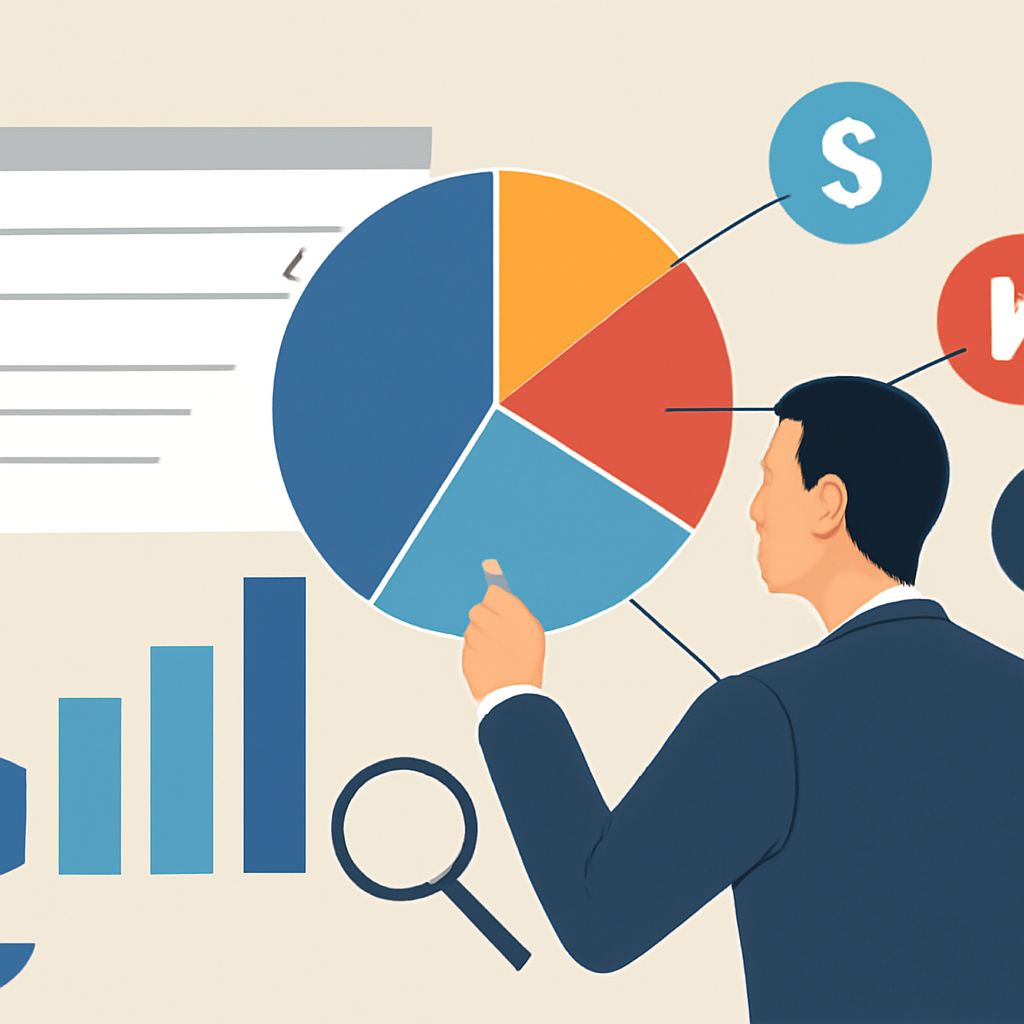
Even with everything above done correctly, the prudent assumption is that organic search traffic to affiliate sites continues to compress in 2026. The teams that will still be operating in 2027 are the ones treating SEO as one channel in a portfolio rather than the channel. Three diversification moves are worth the operational cost.
Newsletter ownership is the largest. A vertical newsletter on Beehiiv or Substack with five to fifteen thousand engaged subscribers can deliver affiliate revenue roughly equivalent to 80–150K monthly organic sessions in the same vertical, with vastly less platform risk. The cost is real — newsletters are a daily editorial commitment — but the asset accrues to the operator, not to Google. The second move is video, specifically YouTube Shorts and full-length reviews on YouTube proper. Affiliate links in description boxes still convert, video reviews feed back into Google’s citation graph (YouTube transcripts are increasingly cited in AIOs), and the audience is largely incremental.
The third is community and direct relationships with merchant programs. Pure affiliate networks (Awin, Impact, CJ) still pay, but the best deals in 2026 are direct hybrid agreements — flat per-install fees, revenue share with caps removed, custom landing pages — and these go to operators with a known audience, not to the highest-DR site in the niche. Building that audience requires owning a channel the operator controls: an email list, a community, a podcast feed. None of these are search-replaceable, which is exactly the point.
A Realistic 90-Day Plan for an Existing Affiliate Site

For an existing affiliate property of any reasonable size, a survival pivot is achievable in a quarter. The plan that has worked across several mid-sized affiliate sites we have observed in early 2026 looks roughly like this.
In the first thirty days, audit the top fifty revenue-generating URLs. For each, classify whether it has first-hand evidence, named author, complete schema, and SSR-rendered key content. Anything that fails two or more checks is queued for rewrite. Pull AIO impression data from GSC’s new AI Overview report (rolled out broadly in Q4 2025) and rank pages by AIO impression share. Pages with high impressions but no citation are the highest-leverage targets — they are already qualified, they just are not getting picked.
In the next thirty days, ship the rewrites for the top ten. Each rewrite should include one real test, one new photograph or screenshot taken in-house, an updated price snapshot with a date, and at least three outbound citations to primary sources. Ship author-entity pages for every contributor, and audit schema across all reviews. Set up a quarterly freshness cadence on the operations side so this is not a one-time event.
In the final thirty days, start the diversification layer. Pick one of newsletter, YouTube, or community and commit to a twelve-week consistency window. Do not start three at once. Track AIO citation share weekly using a tool that supports it (Ahrefs, Semrush, and SE Ranking all added AIO citation tracking by mid-2025); the leading indicator is citations on previously uncited pages, and it usually moves within four to six weeks of the first rewrite shipping.
None of this is glamorous. None of it is a hack. The teams that will own affiliate revenue in 2026 are the ones treating their site like a publication with real reporting, a real audience, and a real product — and using SEO as one of several distribution channels rather than the entire business model. AI Overviews killed the lazy version of affiliate SEO. The serious version is, if anything, more defensible than it has been in years.