Mobile app affiliate marketing changed more between 2021 and 2026 than in the entire decade before. Apple’s privacy push gutted deterministic attribution on iOS, Google’s Privacy Sandbox is doing the same on Android, and the affiliate programs that once relied on IDFA-stitched postbacks now operate in a world where probabilistic models, on-device aggregation, and conversion windows measured in hours decide whether a payout fires. If you run a CPI, CPA, or hybrid app program in 2026, your tracking is already different from what you ran in 2023 — or you are losing money quietly.
This guide walks through how SKAdNetwork 4 actually performs in 2026, what AppsFlyer, Adjust, Branch, and Singular do under the hood today, where probabilistic attribution still earns its keep, and how to negotiate payout terms with publishers when the conversion data on both sides no longer matches.
How SKAdNetwork 4 Reshaped the Payout Conversation
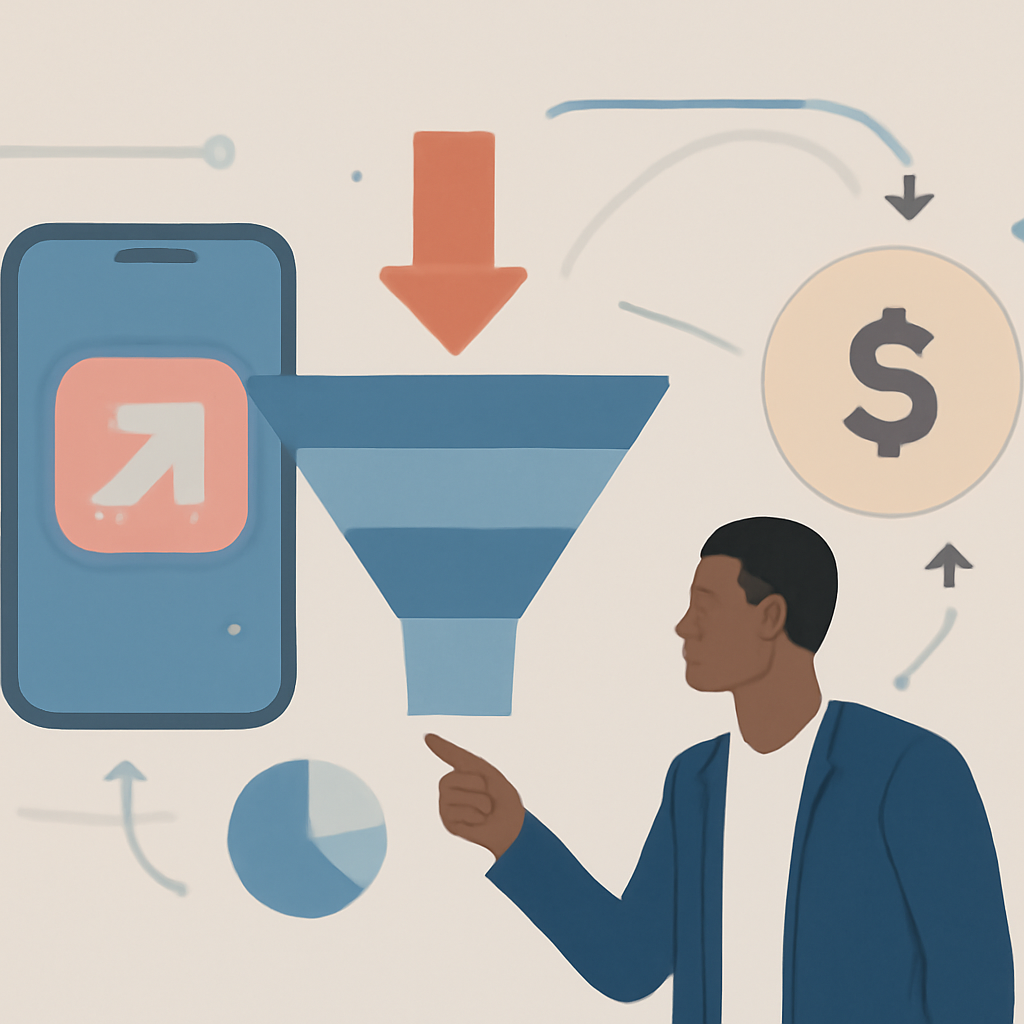
SKAdNetwork moved from a curiosity in 2021 to the default revenue rail by mid-2024. SKAN 4, with its three postback windows (0–2 days, 3–7 days, 8–35 days), hierarchical source IDs (two, three, or four digits), and coarse conversion values, is now the floor that every iOS-paying advertiser builds on. The 2026 reality: more than 92 percent of paid iOS installs in major affiliate programs are measured first through SKAN, with MMP probabilistic data layered on top for optimization but not for payout.
This matters for affiliate negotiation in three ways. First, payouts have to be tied to a SKAN-receivable event. If your offer pays on “tutorial completion” or “first deposit,” that event needs to fit into one of the postback windows and the conversion value schema you can fit into 64 coarse buckets across three windows. Second, attribution credit is allocated by Apple, not by your MMP — meaning last-click logic is enforced by the platform, and your publisher cannot inflate clicks the way they once could on Android. Third, the source ID hierarchy lets you pass campaign, ad group, and creative resolution back to publishers, but only if you negotiate this upfront and align ID assignment.
What breaks: publishers running mass-buy creative tests want granular daily reporting. Under SKAN 4 with 4-digit source IDs and tier-3 privacy thresholds, you may not see anything at all from low-volume creatives. Setting expectations before signing is now part of the deal — not a nice-to-have.
The MMP Stack in 2026: AppsFlyer vs Adjust vs Branch vs Singular
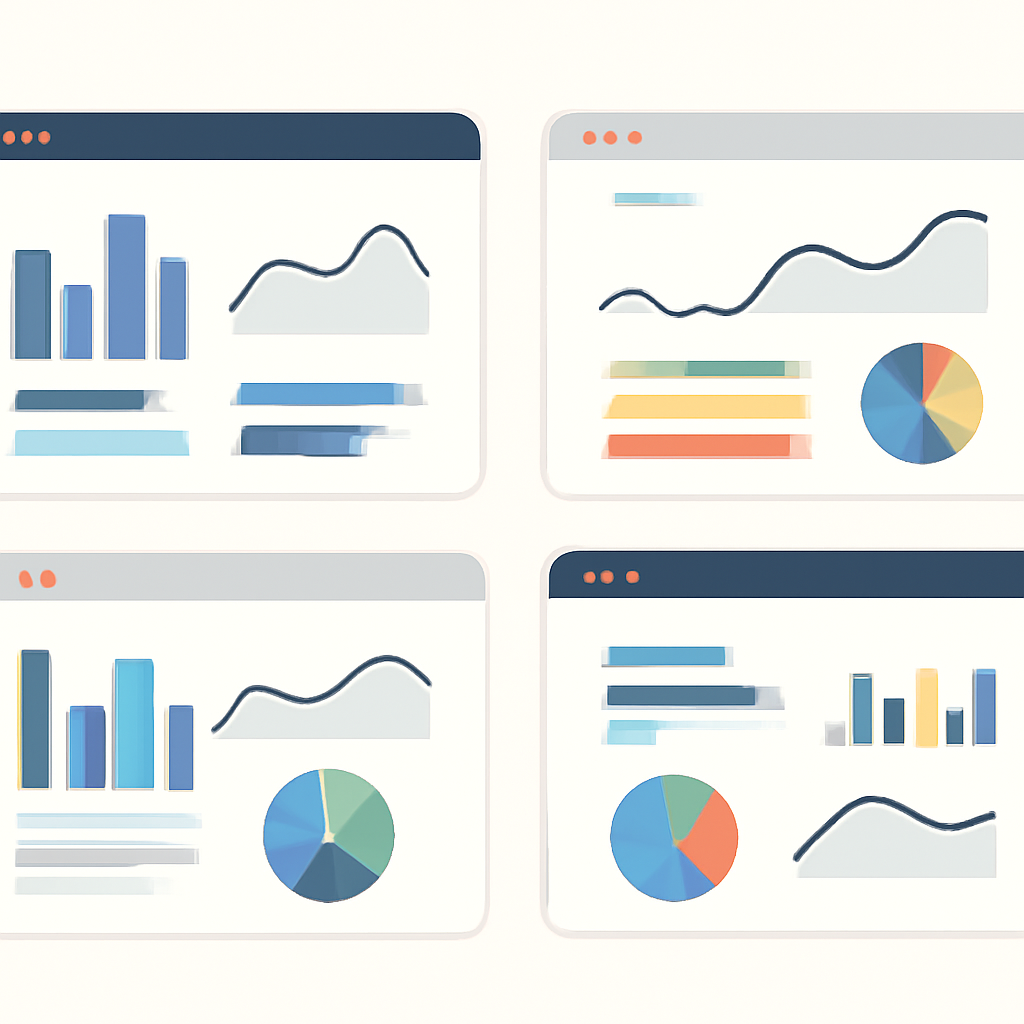
The big four mobile measurement partners have converged on a similar product shape: SKAN aggregator, probabilistic engine, ATT-consented deterministic layer, postback orchestration, and a fraud module. The differences are in pricing, integrations, and how they report uncertainty.
AppsFlyer remains the volume leader with the deepest partner network — more than 12,000 active integrations — and the most mature predictive modeling on SKAN. Their SK4 dashboard now natively supports lock window analysis and predictive LTV in the first conversion window, which is genuinely useful for early bid optimization. Pricing has crept up in 2026; expect tiered pricing tied to attributed conversions, not raw events. Adjust (now part of AppLovin) doubled down on integration with the AppLovin DSP and SparkLabs creative tooling. If you are running significant volume through AppLovin’s network, the bundled package can cut your blended attribution cost by 30 to 45 percent. The downside is a perceived neutrality problem — some publishers will not run on an Adjust-tracked offer if they are running creative through a competing DSP. Branch kept its edge in deep linking, web-to-app, and journeys. For affiliate programs that originate clicks on web (think coupon, cashback, and loyalty publishers driving into a native app), Branch’s deep link infrastructure is harder to replace. Their SKAN reporting is functional but feels secondary to the linking product. Singular is the pick for advertisers running serious analytics. The standalone ROI dashboards, ad spend ingestion from every major network, and the ability to reconcile cost data against SKAN payouts in one view make them the choice for in-house BI teams. Singular’s pricing model — based on tracked spend rather than installs — favors scaled advertisers with disciplined media buying.
In practice, multi-MMP setups are not uncommon in 2026. Larger advertisers run Singular for analytics and AppsFlyer for attribution to maintain neutrality with publishers, accepting the duplicate data ingestion cost.
Probabilistic Attribution: Where It Still Earns Its Keep

Apple banned fingerprinting in iOS 17 and tightened the definition in iOS 19. In 2026, probabilistic modeling on iOS is permitted only in narrow cases — primarily web-to-app handoffs where the user crosses from a Safari context into a native app within a few minutes. For inside-app or ad-network click flows, the MMP cannot legitimately use IP plus user agent to stitch identity.
This pushes probabilistic attribution into two valuable corners. The first is web-to-app conversion measurement for affiliate publishers who drive traffic from blog, review, or coupon sites into a native app install. The handoff window is short and explicitly allowed under Apple’s guidance, and conversion rates are high enough that the statistical noise of probabilistic models stays inside acceptable error bars.
The second is incrementality testing. Even where you cannot stitch users one-to-one, you can run geo-holdout or PSA-control tests to estimate the lift of an affiliate channel against an unexposed baseline. In 2026, most serious affiliate programs run quarterly incrementality reviews and use the lift number — not the click-attribution number — to set publisher payouts on hybrid deals. If a publisher cannot defend their channel under a holdout test, the payout drops or the program ends.
Negotiating Payouts When Both Sides See Different Data

The single biggest operational pain point in iOS affiliate programs is that the advertiser sees SKAN-aggregated data and the publisher sees their own click-and-event logs. The two will not match. They will sometimes differ by 30 percent. This used to be a reconciliation problem; in 2026 it is a payout structure problem.
Three patterns work in practice:
- SKAN-credited payouts with publisher SLAs. The advertiser pays on what SKAN confirms, plus a small “data loss adjustment” — typically 5 to 12 percent depending on vertical — to compensate for known SKAN underreporting. Publishers get a written SLA: payouts close on the 15th of the month following the install, with reconciliation against a third-party MMP report shared in week one.
- Hybrid CPI + revenue share. The CPI floor covers the publisher’s installed user; revenue share over 90 days handles the long-tail LTV that SKAN’s third postback window cannot capture in detail. This shifts some risk to the publisher and rewards quality traffic on long-window monetizing apps (gaming, dating, fintech).
- Lift-based bonus pools. A monthly or quarterly bonus that pays out only if the publisher’s traffic shows positive incrementality versus a control. This caps fraud and incentivizes top-of-funnel publishers who genuinely drive new users rather than poaching organics. Bonus pools are now common in dating, gaming, and crypto verticals where premium publishers can credibly demonstrate lift.
Document the structure in the offer terms. Vague “we’ll pay on confirmed conversions” language used to be acceptable; in 2026 it gets disputed every month.
Fraud Patterns That Survive the Privacy Crackdown

The end of IDFA did not end app install fraud — it just changed the playbook. The fraud techniques that work in 2026 exploit the gaps SKAN created.
SDK spoofing remains the highest-impact attack. Bad actors generate synthetic install postbacks that match the advertiser’s expected SKAN payload, then claim payout. MMP-side validation, certificate pinning, and runtime integrity checks (DeviceCheck, App Attest) are the floor for any advertiser paying meaningful CPI. Conversion value manipulation is the 2026-specific variant. Because SKAN coarse conversion values are mapped to revenue, a sophisticated fraud operator can target the conversion value schema directly — generating just enough simulated behavior to push the conversion value into a payout bucket. This is hard to detect without anomaly monitoring on the conversion value distribution itself, which most MMPs only added in 2025. Click flooding on web-to-app remains alive because the probabilistic handoff is permissive. Watch for publishers with extremely high click-to-install ratios on iOS web-to-app paths; the cap-and-investigate threshold is somewhere around 0.3 percent CTI for legitimate sources on most consumer apps. Re-attribution windows are abused in some networks that allow re-engagement credit on previously installed users. Tighten re-attribution windows to 7 days and require an explicit re-engagement signal (a specific event) rather than just a click.
A 2026 Operating Checklist for App Affiliate Managers

If you are running or buying app affiliate inventory this year, the following checklist captures the operational baseline. Treat anything missing as a vulnerability:
- A documented SKAN conversion value schema, versioned, with the postback window mapping written down and shared with publishers.
- Two-MMP coverage for any program over $50K monthly spend — one for attribution, one for analytics neutrality.
- A standing incrementality test cadence (quarterly minimum) with at least one publisher per vertical tested against geo-holdout.
- Source ID assignment policy: who allocates the 4-digit IDs, how they map to campaigns and publishers, and how the mapping survives publisher changes.
- A written payout SLA for every offer specifying reconciliation date, data source of truth, and the data loss adjustment percentage.
- Real-time anomaly monitoring on conversion value distribution per source ID, with alerts at 2-sigma deviation.
- DeviceCheck or App Attest enforced on first session for any app paying more than $2 CPI.
- Re-attribution window capped at 7 days with explicit re-engagement events required.
Programs that meet all eight items run at materially lower fraud rates and have far fewer publisher disputes. Programs that skip more than two of them typically discover the gap during a quarterly close, when payouts and publisher invoices disagree by enough to matter.
Mobile app affiliate marketing in 2026 is not the deterministic, last-click world it was a decade ago. It is a hybrid of platform-mediated postbacks, probabilistic models with documented confidence intervals, and incrementality-driven payout structures. The advertisers and publishers who treat this as the new normal — and structure their commercial terms around it — are running profitable programs. The ones still trying to recreate 2019 are slowly being priced out.