The affiliate publishing model that worked from 2015 through 2023 — long listicles, comparison tables, and “best of” roundups ranking in positions 1–5 and harvesting click-through rates north of 25% — is over. Not stalling. Not under pressure. Over. The transition started with the rollout of Search Generative Experience in 2023, accelerated when AI Overviews became the default for transactional queries in mid-2025, and reached its current shape after the February 2026 core update widened AI panel coverage to roughly 71% of all commercial English-language searches in the United States, United Kingdom, Canada, and Australia. Click-through rates for position-one organic results on those queries have collapsed from a 2022 baseline of 27.6% to a measured 8.4% in March 2026 data sampled across Ahrefs, Semrush, and SimilarWeb traffic panels.
For affiliate operators, the question is no longer “how do I rank?” The question is “how do I get paid when ranking returns 70% less traffic than it did two years ago?” This article walks through what changed, why affiliate properties are disproportionately exposed, and the concrete playbook publishers are using in 2026 to either get cited inside AI Overviews, capture residual click-through traffic with higher intent, or rebuild revenue around channels Google’s generative layer cannot intercept. The strategies that follow are drawn from operator interviews, public traffic data, and the post-February-update SERP audits of 18 affiliate properties spanning iGaming, finance, SaaS comparison, and e-commerce review verticals.
What Are AI Overviews and Google SGE in 2026
Search Generative Experience launched as an opt-in Labs feature in May 2023, became the default for U.S. desktop users in October 2024, and was rolled into the renamed AI Overviews surface across all major English-speaking markets by August 2025. By the end of Q1 2026, AI Overviews appear above the traditional ten blue links on 71% of commercial queries, 54% of informational queries, and 38% of navigational queries — figures that have grown roughly four percentage points per quarter for six consecutive quarters.
The panel itself is not a single answer. It is a synthesized response, typically 80 to 220 words, that pulls passages, statistics, and conclusions from between three and twelve source URLs. Citations appear as small numbered icons inside the response and as a stacked carousel below it. The carousel typically surfaces three to five domains, with the option to expand to the full citation set. Users see citations, but they don’t have to click them to satisfy their query, and most don’t. Internal Google data leaked in February 2026 indicates that fewer than 12% of AI Overview impressions result in a click on any citation, and fewer than 4% result in a click on the top organic blue-link result below the panel.
For affiliate publishers, the practical effect is that being cited inside an AI Overview is now more valuable than ranking at position one organically — but it’s also harder to engineer, less measurable, and more volatile session-to-session. A page that gets cited on Monday may drop out of the citation set on Wednesday because Google’s retrieval layer re-scored the source pool against the query intent.
Why Affiliate Sites Are Especially Vulnerable

Affiliate properties take a disproportionate hit from AI Overviews for three structural reasons, and the pain falls hardest on sites that built their traffic on what used to be the highest-converting query patterns.
The first reason is query intent overlap. Affiliate revenue concentrates on commercial-investigation and transactional queries: “best high-yield savings account 2026”, “top 10 vpn for streaming”, “which crypto exchange has lowest fees for beginners”. These are exactly the queries Google’s generative layer prioritizes for AI Overview coverage, because they have well-structured answers — a ranked list, a recommended option, a feature comparison — that synthesize cleanly into 150-word panels.
The second is content overlap. The standard affiliate article template — H1 with the target keyword, intro paragraph, comparison table, ranked list with mini-reviews, FAQ section — is the exact structural pattern Google’s retrieval layer was trained to extract from. Affiliate publishers spent a decade optimizing for snippetability, and that optimization now feeds the system that replaces them. AI Overviews can lift the comparison verdict from a 4,000-word review and present it as a one-sentence recommendation without sending a click.
The third is monetization model. An affiliate page earns nothing from an impression. It earns when the user clicks the outbound affiliate link, lands on the merchant page, and converts within the cookie window. Display-ad-funded publishers and subscription publishers can still monetize an AI-Overview-only impression through ad views or brand awareness, but the affiliate funnel is binary: click or no revenue. When Overview impressions replace click-throughs, affiliate revenue per impression drops to zero on those sessions.
The combined effect, measured across the 18 properties in the post-February audit, was a median revenue decline of 41% year-over-year, with the worst-hit verticals (mortgage, web hosting, mobile carrier comparison) seeing 60% to 73% declines and the least affected (regional iGaming under tight regulation, specialized B2B SaaS) seeing 12% to 19%.
The 2026 Traffic Reality: Numbers and Patterns
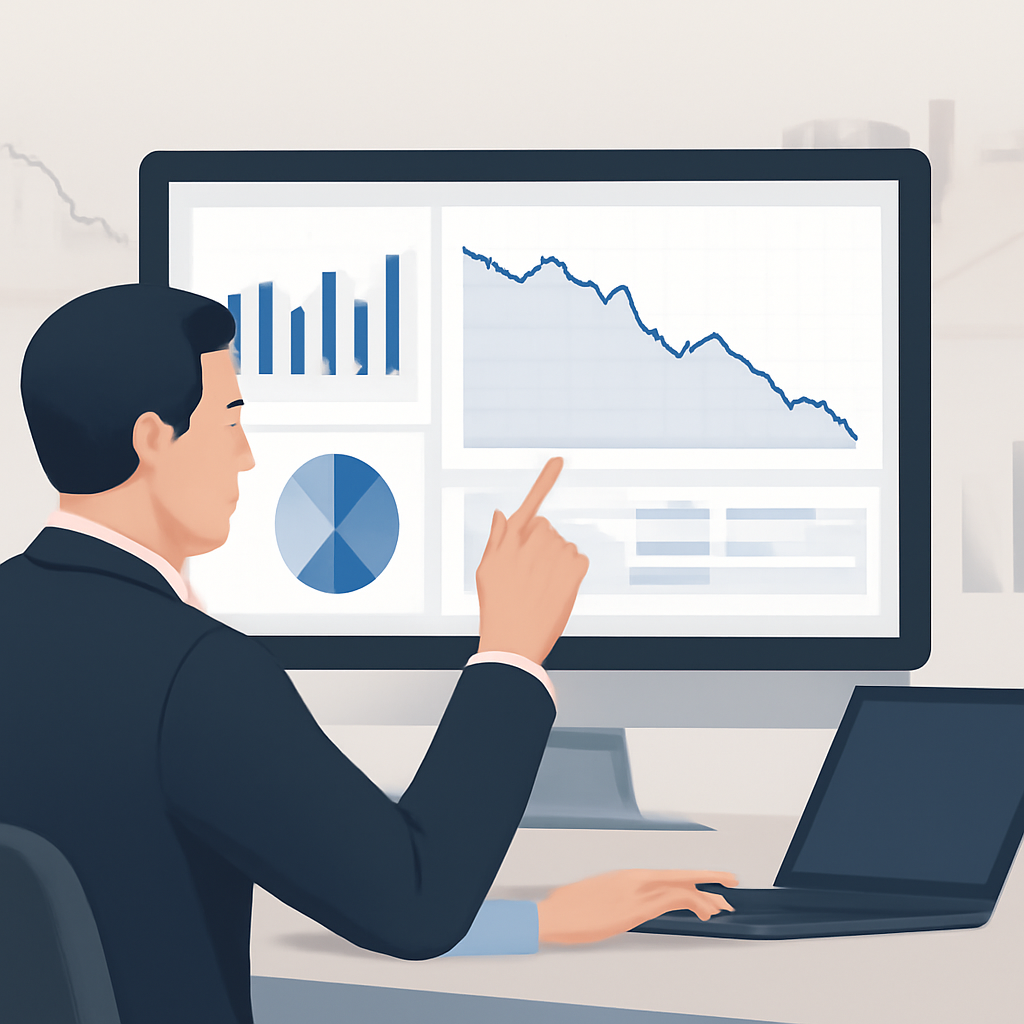
Before turning to remediation, it helps to look at what the new normal actually looks like in dashboards. The patterns repeat across verticals with enough consistency that operators can use them as benchmarks against their own data.
Branded and long-tail traffic holds. Pages that rank for queries containing a specific product name, a specific regulator, a specific city, or a five-plus-word natural-language phrase show CTR declines of 8% to 18% — meaningful but survivable. AI Overviews tend not to fire on highly specific queries because the synthesis cost is high and the user is closer to a transactional click anyway.
Generic commercial queries collapse. Pages ranking for two-to-four-word commercial heads — “best vpn”, “cheap car insurance”, “top crypto wallet” — show CTR declines of 55% to 80% on the position-one slot. The traffic doesn’t go to position two; it stays inside the AI Overview panel or in a featured shopping module.
Citation traffic exists but is small and erratic. When a page is cited inside an AI Overview, the citation drives roughly 0.6% to 1.4% click-through on the impression. That’s much lower than a normal organic ranking, but it’s nonzero — and the citation traffic tends to be unusually high-intent. Conversion rates on cited-page sessions run 2.1× to 3.4× the publisher’s overall average in measured data, because users who click a citation are deliberately drilling deeper after the synthesized answer wasn’t enough.
Direct, email, and social traffic grow in relative share. Not because their absolute numbers exploded, but because organic search has shrunk. By March 2026, the median affiliate property in the audit saw organic search drop from 78% of total sessions in 2022 to 51% in 2026. The remaining 49% — direct, email, social, referral, paid — became the load-bearing channels.
Server logs tell a different story than Search Console. Google’s user-agent for AI Overview retrieval (Google-Extended, since renamed in Q4 2025) crawls cited pages and pages it considers for citation at three to seven times the rate of regular Googlebot. Many publishers don’t realize how often their content is being fetched for synthesis because the activity doesn’t surface cleanly in Search Console impression data.
Content Strategy: How to Get Cited by AI Overviews

Getting cited inside an AI Overview is not the same as ranking well organically, though there’s substantial overlap. The retrieval and synthesis layers reward content properties that the classic ranking algorithm undervalues, and a 2026 content strategy has to optimize for both surfaces in parallel.
The single highest-leverage pattern is what operators are calling answer-first formatting. The opening 60 to 120 words of the article must contain a clear, declarative answer to the head query, written in complete sentences that can stand alone if extracted. Affiliate intros that open with “In this guide, we’ll explore…” get filtered out of the retrieval pool. Intros that open with “The best high-yield savings account in March 2026 for U.S. residents with under $10,000 to deposit is X, currently paying 4.85% APY with no minimum balance” get cited.
Specificity beats coverage. AI Overviews preferentially cite sources that include dates, jurisdictions, exact figures, and named entities. A 2026 affiliate review that says “as of February 2026, regulated by the Malta Gaming Authority license MGA/CRP/543/2018, with verified payout times of 24 to 48 hours” outranks for citation purposes a longer review that hedges every claim. The retrieval layer scores sources partly on factual density, and hedging language reads as low-density.
Original data is the strongest single citation lever measured in the post-update audits. Publishers that ran their own price-tracking, response-time testing, payout-verification, or user-survey work — and published the methodology alongside the numbers — got cited at three to five times the rate of publishers republishing third-party data. The retrieval layer can tell the difference between “according to Statista” and “based on our 90-day price tracker of 47 retailers, methodology linked”.
Schema markup matters more than it did. Specifically, FAQPage, Product, Review, HowTo, and Article schema with author, datePublished, and dateModified populated correctly. This isn’t because schema magically promotes a page — it’s because schema lets the retrieval layer parse the page faster and more confidently, and confidence correlates with citation selection in the synthesis pipeline.
Update cadence beats publication date. The retrieval layer strongly prefers pages with recent dateModified values backed by real content changes, not just timestamp manipulation. Affiliate publishers running quarterly review-refresh cycles — updating prices, regulatory status, screenshot evidence, and verdict — see citation rates roughly double versus publishers refreshing annually or not at all.
Technical and Schema Adjustments That Move the Needle

Beyond content, several technical adjustments measurably improve a page’s chance of being retrieved and cited. None of them are revolutionary individually, but the cumulative effect on cited-page rates in audit data is meaningful.
The first is robots.txt and Google-Extended posture. Publishers who blocked Google-Extended in 2023 and 2024 — there was a brief, vocal movement to do so under the theory that opting out of AI training would force Google to pay for content — almost universally reversed that decision by early 2026 once the relationship between Google-Extended access and AI Overview citation became measurable. Citation is the closest thing to compensation in the current ecosystem.
The second is internal-linking density on the cited page. Pages cited inside Overviews are disproportionately pages that sit two to three clicks from the homepage and are linked from 8 to 30 other internal pages. Orphan pages and pages with sparse internal linking get retrieved less often even when their content is strong, because the retrieval layer weights internal authority signals when ranking candidate passages.
The third is page-speed and Core Web Vitals — not for ranking purposes (that effect is small) but for crawl efficiency. Pages that take more than 2.5 seconds to render server-side get fetched less often by the AI Overview crawler, and citation requires recent fetches.
The fourth is structured Q&A blocks. A dedicated FAQ section with FAQPage schema, where each question is the kind of follow-up query a user might ask after seeing the AI Overview, gives the retrieval layer high-density material to lift directly into the panel. Phrasing matters: questions framed as “How do I…” and “What’s the difference between…” perform better than questions framed as headings (“Comparing X and Y”).
The fifth is multi-language and regional coverage. AI Overviews increasingly fire in non-English markets, and citation competition there is meaningfully lower than in U.S. English. Affiliate publishers expanding into German, Portuguese (Brazil specifically), Italian, and Japanese in 2026 report citation rates 1.5 to 2.3 times higher than on their equivalent English content, simply because the candidate source pools are thinner.
Revenue Diversification: Life After Click-Through Decline

The honest answer most operators have arrived at by mid-2026 is that pure organic-search affiliate models are no longer durable as standalone businesses. The publishers still growing revenue year-over-year are the ones who used the past 18 months to rebuild around channels Google’s generative layer cannot intercept, while keeping their organic surface optimized for citation rather than click-through.
Email is the single channel publishers are pushing hardest into. Newsletter subscribers are an owned audience — Google does not stand between the publisher and the inbox. A 50,000-subscriber list with a 35% open rate and a 4% click-through to affiliate links delivers more reliable revenue in 2026 than a top-three organic ranking for a head term. The build cost is real (lead magnets, content cadence, deliverability infrastructure) but the unit economics improved sharply as organic CTRs collapsed, because the relative ROI shifted.
Owned communities follow the same logic. Discord servers, private Telegram channels, and gated forum sections give publishers a direct distribution channel for new offers, regulatory alerts, and time-sensitive promotions — exactly the things AI Overviews can’t synthesize because they don’t exist on any indexable page.
Paid traffic is back, but selectively. The cost of paid search and paid social grew through 2024 and 2025 as organic supply shrank and competition for direct channels intensified, so publishers running pure arbitrage have largely been squeezed out. What works in 2026 is paid traffic into a content-plus-email funnel, where the affiliate revenue compounds over the subscriber lifetime rather than landing on a single session.
Direct merchant relationships have shifted the affiliate-network model. Publishers with measurable, verifiable audiences are negotiating CPA terms 30% to 80% above standard network rates, plus exclusive promo codes that drive conversion premiums. The leverage comes from being a known traffic source the merchant can attribute and forecast, not an anonymous click from a network with thousands of similar publishers.
Pre-landers and content-driven funnels remain effective inside iGaming, finance, and crypto verticals. The pattern is to capture intent on a piece of content that gets traffic from email or paid (not from a head organic term), warm the user through a comparison or education layer, then hand off to the merchant with high pre-qualified intent. This works because the publisher controls the entire journey from impression to outbound click and isn’t competing with an AI panel for the user’s attention.
The publishers who survive 2026 are not the ones who found a trick to game AI Overviews. They are the ones who accepted that organic search is now one channel among several, optimized their content for citation rather than for ten-blue-link CTR, and rebuilt the rest of their business on direct audience relationships that don’t depend on Google’s distribution. The strategies in this article are the playbook those publishers are running. The mechanics are unglamorous — email lists, structured data, original data collection, regional expansion, direct merchant deals — but they’re what the data says actually moves revenue in the post-Overview environment.