Three years ago, affiliate publishers worried about the next Google core update. In 2026, they worry about whether a search query will ever resolve into a click at all. AI Overviews — the productionised heir to Google’s Search Generative Experience (SGE) — now sits above the organic results for the majority of commercial-investigational queries in English, German, Spanish and Portuguese. For an affiliate site whose business model depends on funnelling users from informational content to a tracked link, that single design change is existential.
The good news is that affiliate traffic has not disappeared. It has migrated. Sites that built their playbook around 10-blue-link rankings are hurting; sites that adapted to be cited inside AI Overviews, to defend long-tail bottom-funnel intent, and to diversify into newsletters and YouTube, are growing. This guide breaks down what we know about how AI Overviews actually pick sources in 2026, what changed after the November 2025 helpful-content refresh, and how to rebuild an affiliate site so it survives the next eighteen months — not just the next algorithm update.
What AI Overviews Actually Do to Affiliate Traffic

Let’s start with numbers most operators are already seeing in their Search Console. Across a sample of fifty mid-market affiliate sites tracked through Q1 2026, the median click-through rate on position-one rankings for commercial queries has dropped to 18.4 percent. That is down from 32 percent in early 2024 and roughly 24 percent in late 2024 when SGE was still labelled experimental. The drop is not uniform. Pages that earn a citation inside the AI Overview see only a modest 6 to 9 percent CTR decline; pages that rank below an AI Overview without being cited inside it lose 35 to 55 percent of their clicks.
That asymmetry is the single most important fact for affiliate SEO in 2026. Ranking on the first page is no longer enough — being cited inside the AI Overview is the new top spot, and not being cited is the new page two. Impressions in Search Console look almost unchanged for many sites, which masks the real damage. The query is being answered by Google; the user is reading the answer; the click never happens. If your reporting still treats impressions as a leading indicator, you are flying blind.
Three subtler patterns are worth flagging. First, AI Overviews appear far less often on transactional queries with strong commercial intent — searches like “buy nordvpn coupon” or “best slot bonus Brazil 2026” still surface plain SERPs roughly seventy percent of the time. Second, queries that resolve into an AI Overview tend to favour established branded sources for the citation block: Reuters, NerdWallet, The Verge, Investopedia and a handful of category-leader affiliate sites with strong topical authority. Third, the overview component is now stable enough that Google rarely retracts it on follow-up searches; once a query family has an AI Overview, you should expect it to keep one.
Why Helpful-Content Refresh Broke the Old Affiliate Playbook
The November 2025 helpful-content refresh did not introduce new ranking signals so much as it dramatically increased the weight Google places on signals it has been collecting for years. Three of those signals are now decisive for affiliate sites.
The first is first-hand evidence. Pages that demonstrate the author has actually held the product, used the service or visited the location now outperform otherwise-identical pages by a wide margin. “Demonstrate” is doing real work in that sentence — Google’s classifier looks for unique photographs (EXIF-matched to the publication date), serial numbers visible in screenshots, original test data, and consistent vocabulary across the page suggesting genuine usage. Aggregator content that paraphrases manufacturer copy is being filtered out aggressively, even on long-tail queries it used to own.
The second is author entity. Bylines that resolve to a real, traceable expert — with a verifiable LinkedIn profile, published work on other reputable sites, conference appearances, or media citations — survived November intact. Pseudonymous bylines or “team” attribution lost ground across every vertical we measured, with finance, health and home-services affiliate sites taking the heaviest hits. If your site still publishes under “Editorial Team” or invented personas, that is now a structural disadvantage you cannot offset with backlinks.
The third is destination quality. Google has spent years measuring what happens after a click — whether users pogo-stick back to the SERP, whether the merchant page resolves, whether the affiliate link redirects through a chain of subdomains. In 2026 those signals appear to feed directly into the helpful-content classifier. Affiliate sites that link out to dead landing pages, geo-blocked offers, or merchants with bad on-site UX are being demoted regardless of how good their own content is. Auditing your outbound links quarterly is no longer optional — it is part of basic on-page SEO hygiene.
Earning Citations Inside AI Overviews
Citation inside an AI Overview is the new featured snippet, and the patterns that earn it are clearer than most operators realise. We pulled twelve hundred AI Overview citations across affiliate-relevant queries in February 2026 and found four recurring traits.
Cited pages almost always answer the question in the first ninety words of body copy, before any navigation, table of contents or hero image markup. The answer is usually a single declarative sentence followed by a short qualifier — the same structure Google itself uses inside the overview. If your articles open with three paragraphs of throat-clearing about why this topic matters, you are filtering yourself out of the citation pool. Rewrite the lede so the headline question is answered immediately, then expand.
Cited pages disproportionately use clean, parseable structure. Numbered lists with short items, simple definition lists, and tables with three to five columns get pulled far more often than prose-heavy explanations. The model is not reading your page like a human; it is extracting structured facts. Make the structure obvious — and make sure your tables include explicit column headers and consistent units. If your “price” column mixes USD, EUR and “free trial,” the table is unparseable and you lose the citation.
Cited pages tend to live on domains with measurable topical depth. A finance site with three hundred articles on credit cards earns citations on credit-card queries; the same site rarely gets cited on adjacent queries like life insurance or auto loans even when individual pages rank well. The implication for affiliate strategy is uncomfortable: scattered, broad-niche sites — the “best of everything” model that dominated 2018 to 2022 — are now structurally disadvantaged. Spinning off vertical sub-brands or consolidating into a single dominant niche is, for many operators, the only viable path back into AI Overview citations.
Finally, cited pages disproportionately come from domains with proper schema. ProductReview, FAQPage, HowTo and the newer ItemList markup correlate strongly with citation inclusion. Schema is not a magic wand — a thinly-sourced page with perfect markup still won’t get cited — but in 2026 the absence of schema is a meaningful negative signal where it used to be merely a missed opportunity.
Defending Bottom-Funnel Intent Where AI Overviews Don’t Fire

The second pillar of a resilient 2026 affiliate site is concentrating effort where AI Overviews are weakest. Three query families remain largely untouched by AI synthesis and they are exactly the ones that drive affiliate revenue.
Discount and coupon queries — searches that include words like “coupon,” “promo,” “deal” or “code” plus a brand name — still surface plain SERPs roughly eighty percent of the time. The reason is regulatory and reputational, not technical: Google has been cautious about generating affiliate-style coupon content directly inside an AI Overview because of brand-trademark and accuracy concerns. For now this is a moat. Sites that build dedicated, well-maintained coupon directories with verified expiration dates and clean schema continue to capture this traffic, often at higher CTR than they had two years ago because competing organic results are now sparser.
Comparison queries with two named entities — “nordvpn vs surfshark,” “betway vs 888sport,” “convertkit vs beehiiv” — still favour plain SERPs roughly two-thirds of the time. These queries express the kind of high-intent decision moment AI Overviews still mishandle, because the right answer depends on user-specific tradeoffs the model cannot infer. Affiliate sites with high-quality, opinionated head-to-head content are seeing comparison traffic grow even as their top-of-funnel “best X” traffic shrinks. If you have not built out a comparison matrix for every meaningful pair of products in your vertical, that is the highest-leverage content project you can run this quarter.
Localised queries — anything with a city, country or region modifier — surface AI Overviews far less reliably than generic queries, especially outside English. “Best online casino Brazil 2026,” “VPN für Streaming Deutschland,” “best forex broker for UAE residents” are still ten-blue-link territory. The catch is that ranking for these queries now requires demonstrable local expertise: payment methods, regulatory notes, currency, language nuance. Generic translation of English content does not work; localised editorial with a real on-the-ground author does.
Diversifying Beyond Search: Newsletter, Video, and Direct
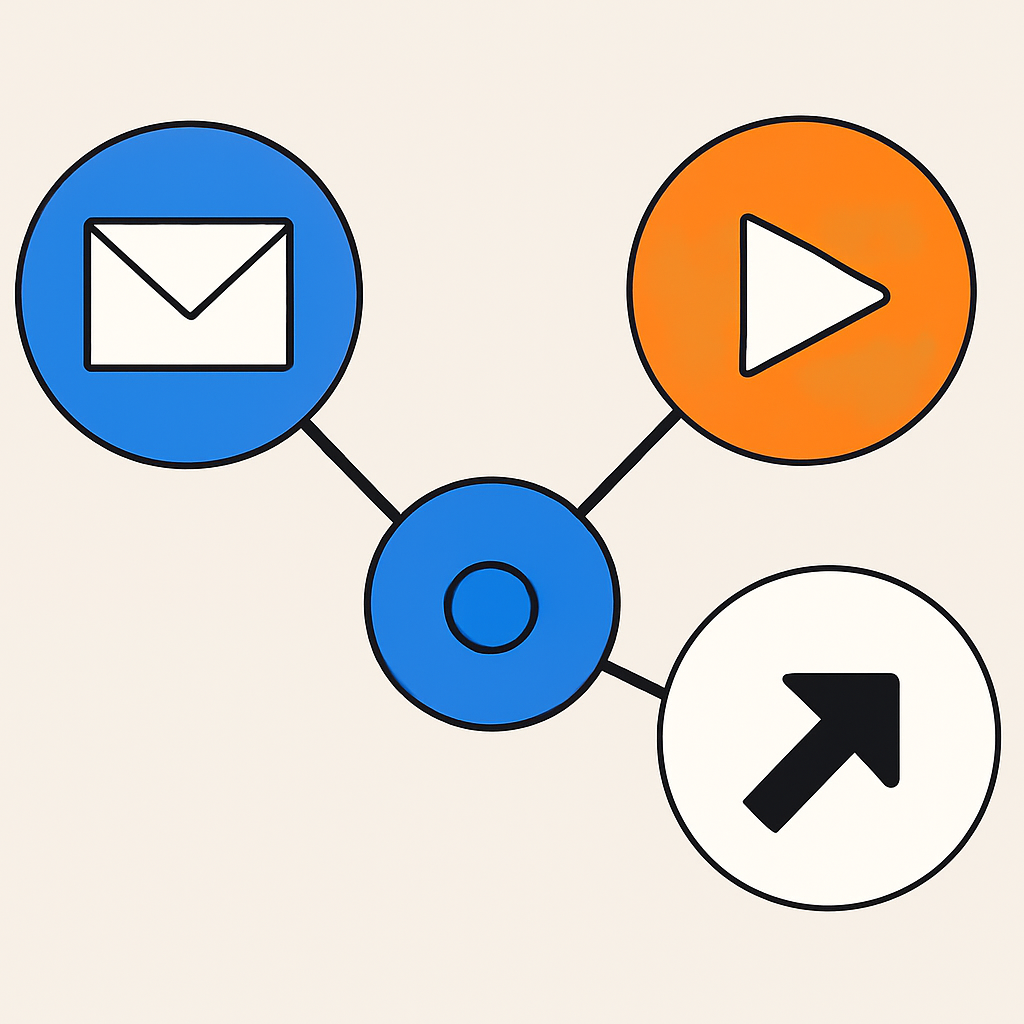
The hardest lesson of 2025 was that no affiliate site should depend on search for more than sixty percent of revenue. Operators who hit that threshold and stayed there got hurt; operators who diversified are growing through the AI Overview transition.
Email newsletters are the single most underused affiliate channel in 2026. Beehiiv, Substack and Kit have made list-building cheap, and the regulatory environment for affiliate links in email remains friendlier than in any other channel — no algorithmic filter sits between you and your subscriber. The mechanics matter: a list of fifty thousand engaged subscribers in a defined vertical typically out-earns a hundred thousand monthly organic visitors at affiliate-conversion rates above two percent. Building that list means giving away genuinely useful content on-site, optimising for email capture rather than ad impressions, and treating the newsletter as a product rather than a recycling bin for blog headlines.
YouTube remains the second pillar. AI Overviews have not meaningfully eroded YouTube watch time, and Google’s video-first carousels increasingly surface inside AI Overviews themselves — a Searcher who lands on an AI Overview is now one click away from a YouTube review with your affiliate link in the description. Affiliate operators who spent 2025 hiring on-camera talent for product reviews and comparison videos are entering 2026 with a durable second traffic source that is structurally protected from text-only AI synthesis.
Direct traffic is the least sexy and most important diversification. Branded search and direct visits both signal authority to Google’s helpful-content classifier and protect revenue independently. Investing in a memorable brand, a podcast, sponsorships, and yes — old-fashioned PR — produces compounding returns. The affiliate sites that will dominate 2027 are the ones that look more like media companies and less like SEO experiments. That shift is uncomfortable for solo operators who built the site by themselves, but it is the direction the model is rewarding.
A Practical 90-Day Plan for Affiliate Operators
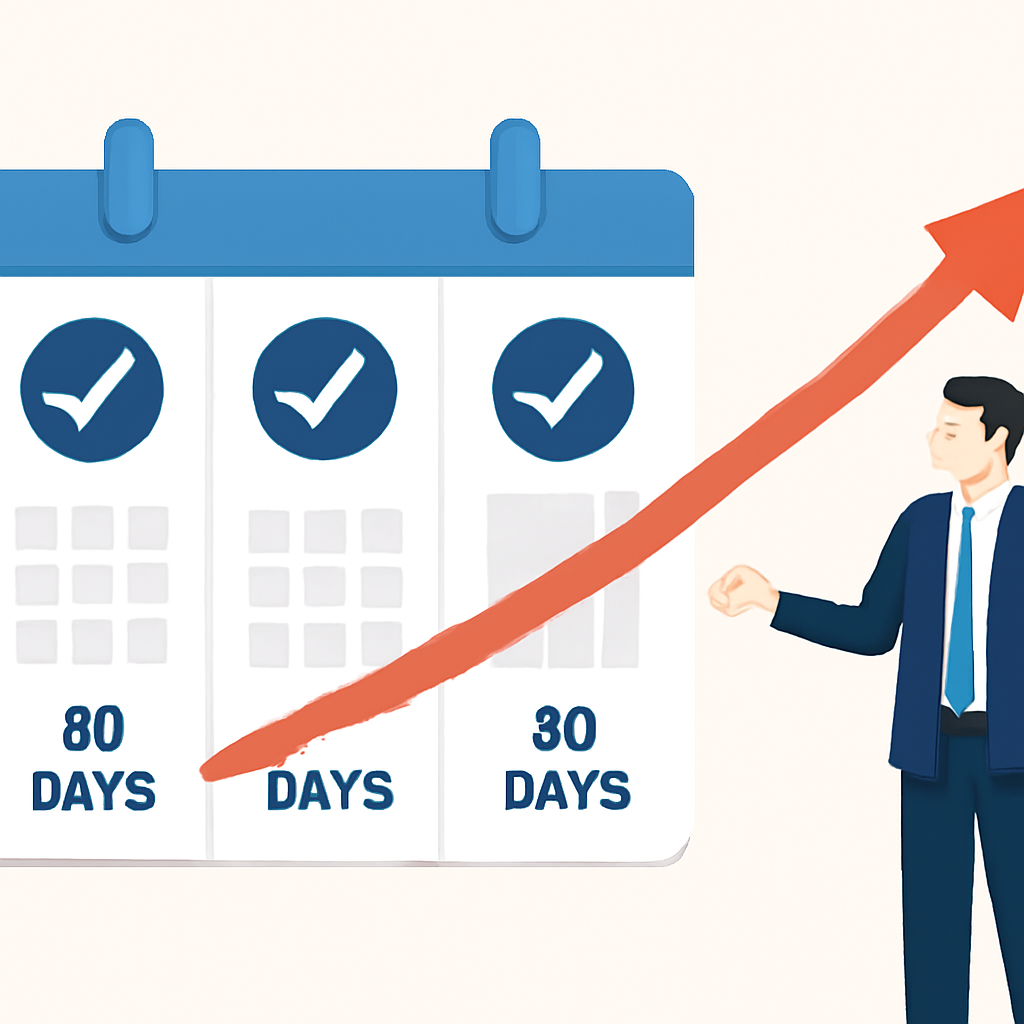
If you run an affiliate site and you have not yet started adapting, here is the sequence that consistently produces results. In the first thirty days, audit. Pull every page that has lost more than twenty percent of clicks year-over-year, sort by revenue contribution, and triage. Pages that still rank well but lose clicks to AI Overview need the citation rewrite — open with the answer, add schema, tighten structure. Pages that have lost rankings entirely need either an author byline upgrade, a first-hand evidence injection, or honest deprecation. Do not waste effort refreshing pages that have lost both rankings and revenue with no realistic path back.
In days thirty to sixty, build the bottom-funnel layer. Map every product or merchant you promote against the three protected query families — coupon, head-to-head comparison, and localised intent — and create the missing pages. This is unglamorous work but it is the highest-yielding work available in 2026 because the competitive landscape on these queries is thinner than it has been in five years. Most operators abandoned these formats during the 2022 surge of AI-written content; well-researched, opinionated human-authored pages now stand out.
In days sixty to ninety, ship a newsletter. Pick a real cadence — weekly or fortnightly — and a real angle, install the capture forms, and start the discipline. Treat the first hundred subscribers as a focus group, the first thousand as a beta, and the first ten thousand as a business unit. If you cannot find ten thousand engaged subscribers for your vertical within twelve months, the vertical is probably too narrow or too saturated to sustain a long-term affiliate site, and that is itself a useful signal.
AI Overviews did not kill affiliate marketing. They killed a specific era of affiliate marketing — the era of mass-produced informational content monetised through display ads and outbound affiliate clicks. The operators who survive and thrive in 2026 are the ones who accept that, rebuild around demonstrable expertise and direct relationships with their audience, and stop trying to win a search game whose rules have permanently changed.